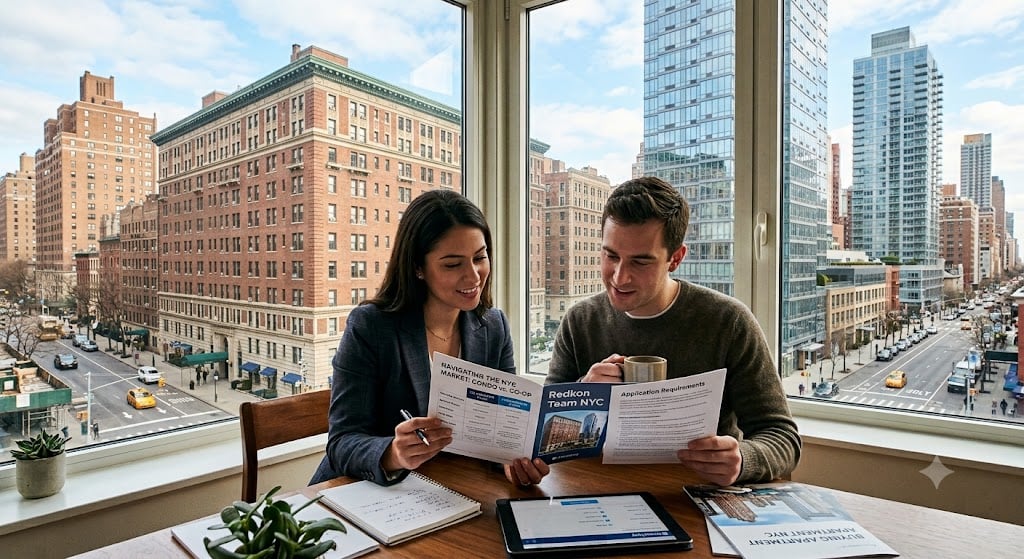
When searching for real estate in NYC, properties with tax abatements frequently jump off the page due to their unusually low monthly carrying costs. However, understanding how different tax abatements function is critical for accurate long-term financial planning when buying an apartment in NYC.
1. The Co-op & Condo Primary Residence Abatement
Designed to lower taxes for full-time residents, the NYC Cooperative and Condominium Abatement reduces property tax bills for eligible homeowners:
Savings Range: Reduces the residential property tax liability by 17.5% to 28.1%, depending on the building’s average assessed unit value.
Key Requirements: The apartment must be your primary residence (investors, LLCs, and pied-à-terre owners do not qualify).
How It’s Applied: Filed on your behalf by your building’s board or managing agent.
2. Development Abatements (421-a and J-51)
In addition to the primary residence abatement, individual buildings may carry property-wide developer tax incentives:
421-a Abatement: Granted to developers of new construction projects to encourage residential development.
J-51 Abatement: Applied to existing residential buildings undergoing major capital improvements or conversions.
3. What Buyers Should Consider Before Purchasing
Phase-Out Schedules: Building-wide abatements (like 421-a) eventually expire. Taxes phase back up incrementally over time (e.g., rising 20% every two years during the phase-out phase).
Resale Impact: As an abatement expires and monthly carrying charges rise, future buyers may negotiate lower purchase prices to offset higher ongoing tax bills.
Long-Term Budgeting: Ensure your financial plan can accommodate the eventual return to full tax rates once building-wide abatements phase out.