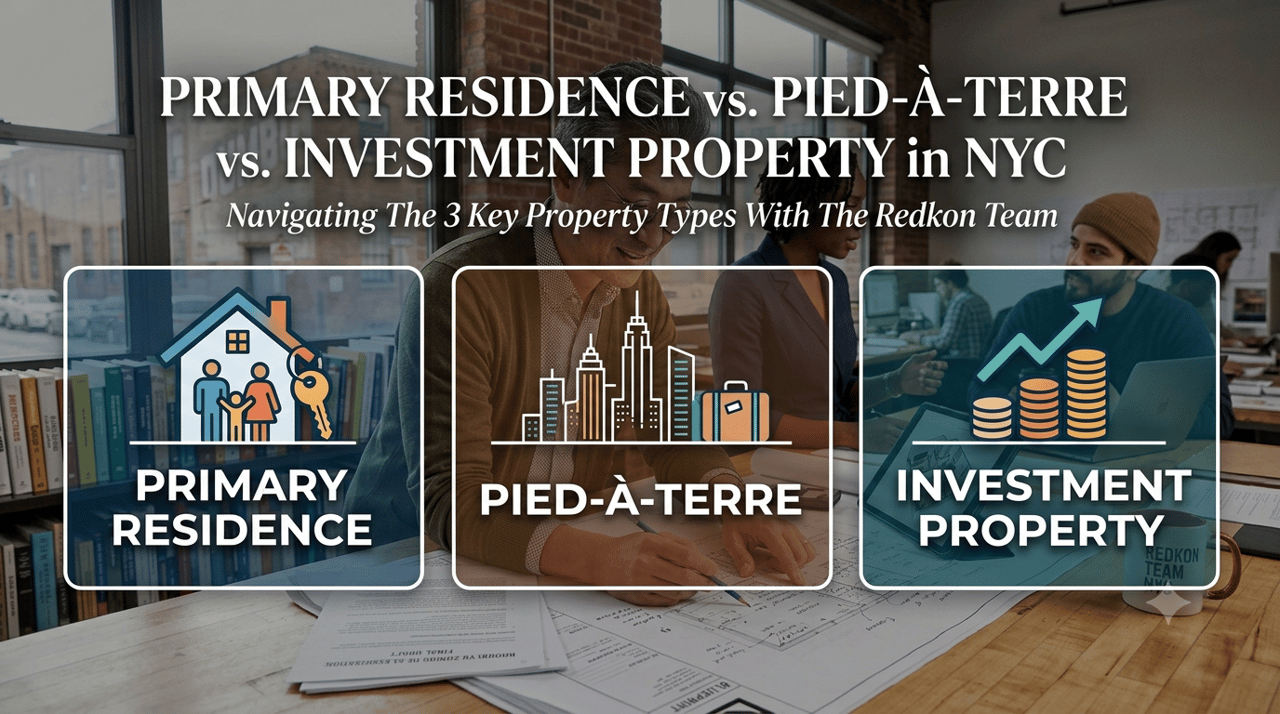
Your search strategy for real estate in NYC depends heavily on how you plan to use the space. Unlike other cities where property use is relatively unrestricted, New York City buildings set strict policies on residency types.
1. Primary Residences
If you plan to live in the home as your main residence, you enjoy the widest selection of inventory when buying an apartment in NYC. Both co-ops and condos welcome primary residents, and you may qualify for local homeowner tax exemptions (such as the NYC Co-op/Condo Tax Abatement).
2. Pieds-à-Terre (Secondary Homes)
A "pied-à-terre" is a property used as a temporary or secondary residence.
Co-op Rules: Many co-ops explicitly prohibit pieds-à-terre to foster a consistent, owner-occupied community.
Condo Flexibility: If you are buying a condo in NYC, pied-à-terre use is almost universally permitted, making condos the go-to option for part-time residents.
3. Investment Properties & Sublet Rules
If generating rental income is your primary objective:
Condos: Offer flexible leasing policies, allowing owners to rent units immediately with minimal application fees.
Co-ops: Typically enforce strict sublet policies—such as requiring 2 years of residency before subletting is permitted for a maximum of 2 out of 5 years.